


2026 International Women’s Day – Rights, Justice, Action: Celebrating the Women at IPH – Reshika Dhir

“The thrill of learning a new area of technology and seeing what interesting problems people are solving and how they take their business from ideation all the way to commercialization and scaling up is the most exciting part of the job.” – Reshika Dhir
For this year’s International Women’s Day, IPHQ News spoke with three female leaders from across IPH member firms about their career journeys, what drew them to IP, their pro bono and volunteering work as well as their advice for young women entering the profession. Across all these conversations, common themes emerged – mentorship, leadership, access and equality, and the power of volunteering. We are inspired by, and privileged to share, the insights of these remarkable women, their passions for IP, and the ways they have supported their clients, teams and communities along the way.
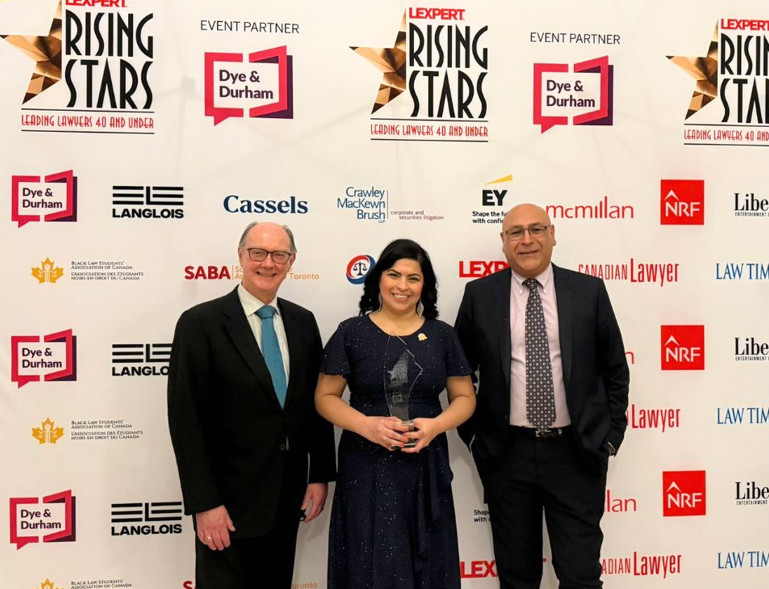
Reshika Dhir – Practice Group Leader for Patents: Electrical and Computer Technologies (Smart & Biggar)
What made you choose a career in IP, and what’s your favourite part of the job?
IP is such a fascinating career choice for me. I didn’t know anything about IP until my third year of engineering, but I was excited to learn that it sits at this great intersection of engineering and law. For somebody who really enjoys problem-solving and diving into new technologies, it felt like a perfect fit. I’ve always sought a career that continually challenges me and allows me to solve meaningful, interesting problems, and I was very glad to discover that IP law exists – because that’s exactly what I get to do every day in my practice.
As a patent agent, Principal and Practice Group Leader at Smart & Biggar, I work closely with many direct clients – amazing engineers, brilliant scientists – to understand their complex inventions and translate them into clear, high-quality commercially meaningful patent filings. The thrill of learning a new area of technology and seeing what interesting problems people are solving and how they take their business from ideation all the way to commercialization and scaling up is the most exciting part of the job. It’s the clients and their journeys – and the privilege of being part of those journeys – that keeps me inspired.
What is your proudest work achievement?
It is really the community involvement that comes through my pro bono work. There are two things that stand out. First, I love volunteering my time with incubators, accelerators and universities, working with early-stage founders and advisors. We talk about approaching IP as a strategic tool rather than just a legal obligation. For many entrepreneurs, sometimes it’s the first time they’re realising the importance of IP and how it can be leveraged for their business success. Seeing that understanding resonate with them and their advisors is quite meaningful.
Second, it’s about mentoring and training our students and junior associates. Supporting them as they build their confidence, learn how to become trusted advisors to their clients, and understand how to show up effectively on client matters is deeply rewarding. It’s especially meaningful to see these associates grow and become senior associates and eventually partners or principals at the firm.
This year’s IWD theme is Rights, Justice, Action for all women and girls. For women founders, creatives or innovators, where do you see the biggest barriers to accessing IP protection?
There are a lot of barriers that still exist for women founders. One of the biggest issues is that many of these women innovators are not introduced early enough to the importance of IP. By the time they are turning their minds to it, it’s because something has either gone wrong or their critical rights are lost. Many simply don’t have access to the networks or advisors who discuss IP strategically at the right stage.
This lack of access creates a ripple effect. Without early exposure to IP guidance, women also face limited access to funding and investors.
The cost and complexity of IP can also feel very overwhelming, very opaque, and financially prohibitive, especially for early-stage founders. As a result, many women are discouraged from engaging proactively with IP, which in turn limits their ability to scale or to attract more investment or to defend their rights later on.
This becomes a vicious cycle: fewer women receive the support they need to grow IP-rich businesses, resulting in fewer women-led companies reaching visibility, which then often results in fewer female investors who can reinvest in the next generation of women founders. The cycle reinforces itself – but it doesn’t have to. IP, when understood and leveraged early, can serve as a powerful gateway to unlock a lot of economic growth for more women to thrive in the innovation ecosystem.
What would your advice be for young women entering the IP profession, especially those aspiring to leadership?
It is very important as you’re starting out to build your skill set and depth of knowledge, whether it’s technical or legal knowledge, or ideally both, because that helps you build credibility with your clients and colleagues. This credibility compounds over time, and it can really help become the strongest leverage for women to advance their careers. The more competent they are, the more confident they are, and the more opportunities they can unlock.
It’s also very important for women to be strategic about their relationships and the networks they’re building. You can’t exist in isolation. You have to step outside of your comfort zone, talk to people, and cultivate a network of mentors who can give you good advice, and a network of sponsors who can advocate for you when you are not in the room.
For aspiring leaders, saying yes to opportunities is essential. Sometimes these opportunities feel unfamiliar or challenging, and women often wait until they feel 100% ready before stepping forward. But sometimes you simply have to trust yourself, raise your hand and jump in.
Sign up to our free newsletter to stay informed, connected and inspired by all things IP.

Featuring