

AI For A Healthy Brain – Wearable Technologies

In the lead up to the 2025 Braintech Summit, sponsored by IPH member firm Griffith Hack, we sat down with Anthony Selleck to discuss advancements in wearable technology, and its contributions to neurological health.
What is a wearable?
Wearable technology has been around for hundreds of years. Around 1500, Da Vinci first described the concept of a pedometer, wearable devices that monitor step count. The first wearable hearing aids were introduced in the late 1800s. These days, smartwatches are everywhere, with global smartwatch market revenue projected to reach $34.2 billion by 2026, commonly including health features such as heart rate and sleep monitoring.
So, what makes a wearable technology, and what can qualify them as a medical device?
“A wearable is any technology which you can wear on yourself. Wearables are portable and can be easily attached to your body or a body part,” says Anthony Selleck, Special Counsel at Griffith Hack.
“There are several ways in which wearable tech is beneficial for our health. Popularly there are general consumer-facing products focused on fitness and wellbeing, such as smartwatches or pedometers. There are also more specialised medical applications for wearables, implemented by equipping the wearable with more advanced sensing capacities such as pulse oximeters to measure oxygen saturation, or adapting the wearable to communicate with external medical devices such as EEG electrodes, CPAP machines or continuous glucose monitoring systems”.
More accurate, more comfortable, and tailored to you
There is high potential for these devices, and innovators are continuing to advance the technology in multiple different ways. Earlier this year, the BioMelbourne Network held a session on smart health innovation, showcasing startups innovating wearables for a range of health benefit applications, spanning nicotine detection, molecular insights, cardiology, pregnancy outcomes and potassium monitoring. Selleck outlines three distinct categories in which wearables are advancing.
Comfort
“One area in which we are seeing innovation is comfort. Innovators are introducing new materials to enhance user experience, particularly for devices that users must wear for long periods of time, such as for sleep monitoring.
Hardware
“Hardware is another area, which is primarily to do with sensing technologies, and advancements in what we sense, and how well, covering heart rate, pulse, oxygen saturation and in the future brain electrical activity and other aspects of the human body. The sensing capacity of wearable devices is certainly improving, both in specialised medical devices and consumer devices – we are now seeing a merger of the two. Advancements in wearable sensing has also meant that in some instances they can be used in conjunction with existing medical treatments and medical devices.
Personalisation
“A particularly exciting area of advancement in wearables is their use in facilitating personalized medical treatments. Broadly, this involves a wearable device or connected sensor continually measuring various treatment parameters. These are then sent to an AI model that generates personalised treatment modifications. This can be used in a wide range of applications including dosage regime calculation, medical device control and even robotic surgery. Leveraging wearables in combination with AI to develop personalised medicine is an incredibly exciting area” says Selleck.
“Neurology is a space where we are seeing some really interesting innovations in wearables, such as their use with non-invasive neurostimulation treatments. Previously, these treatments could only be delivered through a surgical implant, which has risks involved. With the improvements in electrode sensing and treatment monitoring being made by wearables and AI models, the implant can be replaced with a non-invasive electrode array, which is a much less intimidating alternative. AI and personalisation can also be applied here, understanding which brain nerves are being stimulated to trigger the preferred change or reaction.”
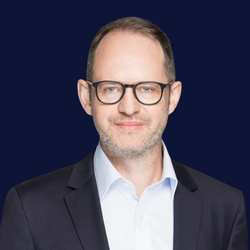
Anthony Selleck – Special Counsel, Griffith Hack

AI applications for healthier bodies and brains
With the advent of AI, personalisation is the new frontier of medical technology, unlocking huge potential to understand medical issues and treat them quickly and accurately. Selleck notes how innovations in personalisation are particularly exciting in neurology.
“Neurology is a space where we are seeing some really interesting innovations in wearables, such as their use with non-invasive neurostimulation treatments. Previously, these treatments could only be delivered through a surgical implant, which has risks involved. With the improvements in electrode sensing and treatment monitoring being made by wearables and AI models, the implant can be replaced with a non-invasive electrode array, which is a much less intimidating alternative. AI and personalisation can also be applied here, understanding which brain nerves are being stimulated to trigger the preferred change or reaction,” he says.
Sensing capabilities are also being enhanced by AI. This combined with personalisation could lead to huge benefits for users.
“AI is also being used to improve sensing capabilities and user experience to optimise results. For example, two people wearing the same wearable on the same part of their body may pick up results at different levels of accuracy. AI is being used to assess how accurate the reading is and to generate responsive directions of where to place the wearable to improve signal clarity.
“Areas like medtech, and really any computer-adjacent technologies, are impacted by AI and machine learning, and it’s really important to maintain an up-to-date suite of IP protection that considers these rapid developments. Patents are one aspect of this, but confidential information, copyright, database rights and other regimes can be just as important. That’s where a firm like Griffith Hack can support innovators as both a law firm and a patent attorney firm – we can provide guidance on the full suite of IP protection options,” Selleck concludes.
Anthony Selleck is a patent attorney at Griffith Hack based in Melbourne, Australia who specialises in AI, computer technologies and medical devices. Click here for more information.
Sign up to our free newsletter to stay informed, connected and inspired by all things IP.

Featuring